Buying Foreign and Exotic Kittens in Nigeria: The Ultimate Scam-Free Buyer's Checklist
Avoid deposit scams, sick backyard litters, and counterfeit vaccine cards. Use this exhaustive verification checklist before buying an exotic kitten in Lagos, Abuja, or across Nigeria.
The demand for purebred and foreign exotic kittens—such as British Shorthairs, Persians, Scottish Folds, Ragdolls, and Bengals—has exploded in Nigeria. Unfortunately, this surge in popularity has also attracted unethical puppy-mill style breeders, social media photo thieves, and scammers preying on excited buyers.
To protect yourself financially and ensure your new companion enters your home healthy, vaccinated, and socialized, use this step-by-step buyer's checklist.
Step 1: Beware of the Classic Online Deposit Scams
The most prevalent pet scam on Nigerian Instagram, TikTok, and classified platforms involves fake sellers using stolen photos from international catteries in Russia or Europe.
- **The Price Too Good to Be True**: If someone advertises a "Pure British Shorthair kitten" for ₦120,000, it is 100% a scam. High-grade foreign kittens cost substantial sums to breed, vaccinate, and feed.
- **Insist on Live Video Verification**: Never wire a deposit based solely on photos or pre-recorded clips. Insist on a WhatsApp or FaceTime live video call. Ask the seller to say your name, write today's date on a piece of paper beside the kitten, and let you watch the kitten walk, play, and interact with its siblings.
- **Physical Inspection Whenever Feasible**: If the breeder is in Lagos or Abuja, arrange to view the kitten in person or send a trusted veterinarian.
Step 2: Verify the Age and Weaning Milestones
Unethical breeders often sell kittens at 4 or 5 weeks of age to save on feeding costs and make the animals appear "extra tiny and cute."
- **The 8 to 12 Week Rule**: A kitten must never leave its mother before 8 weeks of age; 10 to 12 weeks is ideal for pedigree cats. Kittens separated too early miss crucial maternal antibodies from colostrum, struggle with lifelong immune deficiencies, and often exhibit behavioral problems like anxiety or inappropriate biting.
- **Solid Food Weaning**: Confirm that the kitten is fully weaned onto solid kitten food (wet or softened dry kibble) and has been eating independently for at least two weeks.
- **100% Litter Box Independence**: By 8 weeks, a healthy kitten should effortlessly navigate an open-sided litter box filled with clumping or wood-pellet litter without accidents.
Step 3: Inspect Physical Health Indicators
When examining the kitten in person or on high-definition video, look for these vital health markers:
- **Eyes and Nose**: Both eyes should be bright, wide, and clear with no green or yellow discharge, cloudy film, or crusty nostrils.
- **Ears**: Check deep inside the ear canals. They should be clean and pink. Black coffee-ground debris indicates contagious ear mites.
- **Belly & Anal Region**: The belly should be gently rounded but not hard and distended like a drum (a sign of heavy roundworm infestation). The fur around the anus must be clean and completely free of dried stool or diarrhea staining.
- **Coat and Skin**: Part the fur along the back and neck. Look for flea dirt (small black flecks) or circular patchy bald spots with red ringed edges (ringworm/fungal infection, which easily transfers to humans).
Step 4: Validate Vaccination Cards and Health Certificates
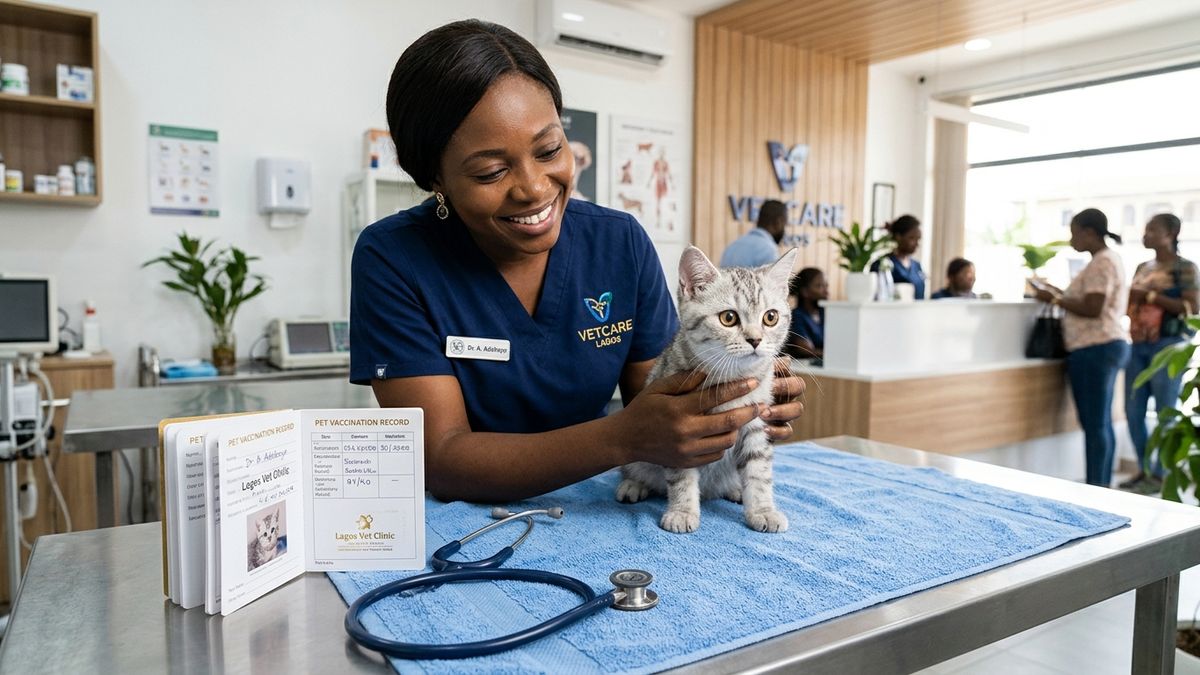
A genuine breeder provides a signed and stamped Nigerian Veterinary Medical Association (NVMA) registered vaccination card:
- **Vaccination Stamps**: Verify the sticker batch number of the FVRCP (Feline Viral Rhinotracheitis, Calicivirus, Panleukopenia) vaccine. Ensure the vet's practice stamp and telephone number are legible.
- **Cross-Verify on PetMap**: Don't take a stamp at face value. Search the issuing clinic on PetMap to verify that the practice is legitimate and active. If in doubt, call the clinic directly to confirm they administered the shots to that specific litter.
- **Deworming Log**: Check the dates of routine preventative deworming (typically administered at 2, 4, 6, and 8 weeks).
Step 5: Safe Transit & Home Arrival Protocol
If your kitten is being transported interstate (for example, flying from Lagos to Abuja via Air Peace or traveling via dedicated air-conditioned pet road transit):
- Ensure the pet travels in an IATA-compliant hard-shell carrier with absorbent puppy pee pads and adequate ventilation.
- Within 48 hours of arrival, book a comprehensive onboarding checkup at a vetted veterinary clinic near you using PetMap.ng. Having your own vet verify weight, heart rhythm, and baseline bloodwork gives you complete peace of mind.